
Have we created a cure for HIV...?
- Lev Narozhny
- 11 hours ago
- 14 min read

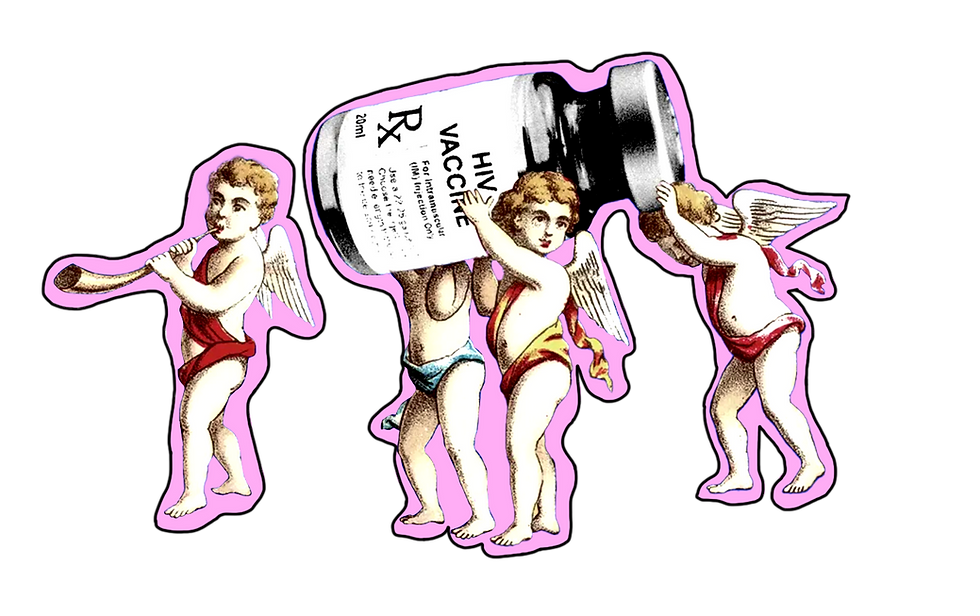
Today’s topic will leave no one indifferent. In this article, we will discuss the stigma faced by people living with HIV positive status. We will explore common stereotypes about HIV, how it is transmitted, new developments in vaccines, as well as how supportive therapy and prevention work. We will also touch on other sexually transmitted infections. To prepare this article, we visited the Greek organization CheckPoint, which is engaged in educational and preventive work in this field, and spoke with its director, Amelia. She helped us answer important questions. We have tried to write this article in a way that is understandable for people of all ages.
How did HIV appear and how did it spread to Europe?
To understand what we are talking about, it’s worth starting from the very beginning. It is believed that HIV (human immunodeficiency virus) originated from the simian immunodeficiency virus (SIV).When people hunted monkeys and consumed their meat, the virus could enter the human body through blood. Inside the human body, the virus mutated and adapted to its new host.People began to be infected with a new virus unknown to science before. Mass migration, globalization, and connections between Europe and its former colonies in Africa contributed to the rapid spread of the virus to other continents. HIV was first identified in the USA in 1981, when rare and severe illnesses such as Kaposi’s sarcoma and pneumocystis pneumonia were observed in young men. The SIV virus was officially discovered only in 1985. However, research has shown that SIV existed in monkey populations long before the discovery of HIV.
Sources:
An interesting fact
Many have only heard of “HIV,” but in fact, there are two types of the virus: HIV-1 and HIV-2. The human immunodeficiency virus (HIV) exists in two main forms:
HIV-1
HIV-2
Both types originated from simian immunodeficiency viruses (SIV) transmitted to humans through contact with the blood of infected animals (e.g., during hunting and meat consumption).HIV-1 came from the SIVcpz virus found in chimpanzees (Pan troglodytes).HIV-2 came from the SIVsmm virus found in sooty mangabeys (Cercocebus atys).These were two independent zoonotic transmissions (virus transfer from animals to humans) occurring at different times and in different regions of Africa. Their molecular differences amount to about 55% genetically.
Main differences between
From an epidemiological and clinical perspective, HIV-1 is considered more dangerous because:
It spreads faster and more easily.
It destroys the immune system more quickly.
It more often leads to AIDS and death if untreated.
HIV-2, on the other hand, may not cause severe symptoms for many years, and some infected individuals remain asymptomatic for life. However, it can still lead to AIDS, especially without therapy.
However, it is important to remember, as we mentioned earlier, that HIV (all types) is highly variable. Even if two people are infected with the same type of virus (for example, HIV-1), the genetic structure of the virus in their bodies can differ. This is due to the virus’s high mutation rate.
For example, beyond natural mutations: in people who do not strictly follow their antiretroviral therapy schedule, the virus in their bodies may develop resistance (tolerance) to certain drugs. Accordingly, if this resistant virus is transmitted to another person, it may remain resistant to some therapies.
In such cases, changing the treatment regimen or adding additional medications may be required to continue effectively suppressing the virus.
How is HIV transmitted?
Simply put, HIV is transmitted through bodily fluids, but not all of them are equally dangerous. Below a table with risk levels:
Fluid | HIV Concentration | Transmission Risk |
Blood | Very high | Yes, especially through needles, open wounds, etc. |
Semen | Very high | Yes, during unprotected sex |
Vaginal fluids | High | Yes, during unprotected sex |
Rectal fluids | High | Yes, especially during anal sex |
Breast milk | Moderate | Yes, especially during breastfeeding |
Here are fluids that do NOT transmit HIV:
Fluid | HIV Concentration | Transmission Risk |
Saliva | Very low | No |
Urine | Very low or none | No |
Sweat | Very low or none | No |
Tears | Very low | No |
How many people live with HIV in the EU?
According to official data, approximately 0.2% of the population across European Union countries live with HIV on average. However, it is important to remember:Not everyone knows their status. Many may carry the virus without realizing it. This means the actual number of HIV-positive people could be higher than official figures indicate.
Source:
What is the difference between HIV and AIDS?
HIV is a virus. Its full name is human immunodeficiency virus.AIDS is a disease caused by HIV at the final stage, when the immune system is almost completely destroyed. AIDS stands for Acquired Immunodeficiency Syndrome.
Simply put: HIV is the virus. AIDS is the final stage of the disease caused by this virus.
AIDS is considered the last stage of HIV infection. Below are the four main stages of HIV development:
Acute HIV infection (first weeks after infection)
Appears 2–4 weeks after infection.
The immune system has not yet produced antibodies.
The virus actively multiplies, and the person is highly contagious.
Often resembles a severe cold: fever, weakness, rash, sore throat.
Asymptomatic stage (latent phase)
Can last from 3 to 10 years or more, depending on the immune system, virus type, and treatment availability.
The virus remains in the body and continues to multiply slowly.
The person feels healthy.
HIV antibodies are already present.
Symptomatic stage
The virus increasingly destroys CD4 immune cells.
Early signs of weakened immunity appear: frequent illnesses, fungal infections, weight loss, chronic fatigue.
Opportunistic infections develop these are dangerous only when the immune system is weak.
AIDS (Acquired Immunodeficiency Syndrome)
CD4 cell count drops below 200 cells/mm³ of blood (normal: 500–1600).
The body loses the ability to fight even mild infections.
Rare cancers and severe infections (e.g., pneumocystis pneumonia) may develop.
Without treatment, AIDS leads to death within 1–2 years.
Symptoms
After infection, the phase lasting 2–4 weeks is called acute retroviral syndrome and resembles a severe cold or flu. Symptoms may include:
Fever (high temperature).
Swollen lymph nodes (neck, armpits).
Sore throat.
Fatigue and weakness.
Muscle and joint pain.
Skin rash.
Headache.
Mouth ulcers or white coating.
Important: In some people, this phase may be asymptomatic or with mild signs that pass quickly.
2. Latent phase
After the acute phase, symptoms often disappear, and the virus may remain in the body without noticeable symptoms for several years (usually 5–10 years). The person feels normal, though the virus gradually damages the immune system.
3. Symptoms of progressing infection
If untreated, HIV weakens the immune system over time, leading to more serious symptoms and complications:
Frequent or severe infections (pneumonia, fungal infections, tuberculosis).
Constant fatigue.
Unexplained weight loss.
Night sweats.
Chronic diarrhea.
Long-term swollen lymph nodes.
Various cancers (e.g., Kaposi’s sarcoma).
Why Is There Still No Cure for HIV?

For anyone who has ever heard of HIV, the same question inevitably arises: why is there still no vaccine? The virus has been known to humanity for decades. Scientists have studied its structure thoroughly and developed highly effective treatments that allow people to live long and healthy lives. Yet, a vaccine remains elusive. Why?
Integration Into the Host Genome
HIV is a retrovirus, which means it integrates its genetic material into the DNA of infected cells primarily CD4+ T lymphocytes, the key cells of the immune system. Once integrated, HIV can remain in a latent (dormant) state, not actively replicating or producing viral proteins.If HIV did not enter cells and stayed only in the extracellular space, antibodies and other parts of the immune system might be able to recognize and neutralize it more effectively similar to how the body responds to influenza or herpes viruses.
High Genetic Variability and Rapid Mutation
HIV mutates rapidly due to its replication mechanism (copying RNA into DNA), resulting in many different viral variants (quasi-species) within a single person. This makes it extremely difficult to develop a vaccine that can recognize and eliminate all versions of the virus.Rapid mutation also enables the virus to develop resistance to medications, which is why combination therapy is essential.
Lack of an Effective Immune Response
Unlike many viruses, HIV targets immune cells themselves, weakening the immune system’s ability to fight back. This impairs the body’s ability to generate a lasting and effective response to eliminate the virus. HIV also avoids immune detection by changing its outer proteins (glycoproteins), reducing the effectiveness of antibodies and T-cell responses.
Latent Viral Reservoirs
Even when antiretroviral therapy (ART) suppresses HIV in the bloodstream, small populations of the virus can persist in hidden reservoirs—like lymph nodes, the brain, gut, and other tissues. These reservoirs are inaccessible to both drugs and immune responses. In other words, ART suppresses HIV replication but cannot eliminate it completely. Once treatment is stopped, HIV can reactivate from these reservoirs, often with resistance to previously used medications.
Challenges of Vaccine Development
An effective vaccine must stimulate the immune system to recognize and kill the virus and establish long term memory. Due to HIV’s rapid mutations, ability to hide, and its direct attack on the immune system, developing such a vaccine remains an enormous scientific challenge.Several vaccine candidates have undergone clinical trials, but none have shown sufficient protection to be approved for widespread use.
HIV Treatment and Prevention
Modern medicine has transformed HIV into a chronic, manageable condition. With proper treatment, a person living with HIV can have the same life expectancy as someone without the virus.
1. Antiretroviral Therapy (ART)
ART targets various stages of HIV’s lifecycle, preventing it from entering cells and replicating. While older regimens involved taking up to 10 pills a day with serious side effects, many modern treatments require just one pill daily with minimal side effects.
2. Long Acting Injectable Medications
Daily pill regimens can be difficult to maintain. People may forget, lose their medication, or skip doses reducing effectiveness and increasing the risk of resistance. Today, there are injectable forms of ART administered every 1–3 months.However, they are expensive, not universally approved (even within the EU), and may not be covered by insurance.
3. Pre Exposure Prophylaxis (PrEP)
PrEP is the use of antiretroviral drugs by HIV-negative people at risk of infection. Taken daily, it is over 90% effective in preventing HIV.PrEP prevents HIV from integrating into cells after exposure. However, protection is only maintained with consistent use. Missed doses can reduce effectiveness and increase the risk of resistance if infection occurs.
4. Post Exposure Prophylaxis (PEP)
PEP is emergency treatment started after potential exposure to HIV (e.g., unprotected sex or blood contact).It must begin within 72 hours of exposure and is typically taken for 28–30 days. Though slightly less effective than PrEP, PEP can still prevent infection if started promptly.
5. HIV Vaccines in Development
Although no approved HIV vaccine exists, global research efforts continue. Promising approaches include:
Training the immune system to prevent infection.
Using mRNA technologies (as seen in COVID-19 vaccines).
Developing longacting immunity lasting 3–12 months per injection.
Where to Get Help
If you have any questions about HIV treatment or prevention, reach out to your nearest HIV or sexual health center. Only an infectious disease specialist (virologist) can prescribe PrEP, PEP, or antiretroviral therapy.
Myths & Why They’re Dangerous

“HIV Doesn’t Exist / The Medication Is Worse Than the Virus”
This is one of the most dangerous and widespread myths about HIV.
What proponents claim:
HIV does not exist or no one has ever seen it.
Antiretroviral therapy (ART) is worse than the virus itself.
Treating HIV is unnecessary, especially if there are no symptoms.
The facts:
HIV is a real virus, detectable with modern laboratory techniques. It can be visualized via electron microscopy, its RNA can be sequenced, and the body’s immune response can be measured.
Without treatment, HIV gradually destroys the immune system. Many people think “nothing is happening” because progression can take years but once immunity is weakened, even common infections become life threatening.
Modern ART is safe and effective. Earlier therapies from the 80s and 90s did cause serious side effects, but today most regimens are well tolerated often requiring just one pill a day with minimal side effects. Routine monitoring of kidney and liver function, immune cell counts, and viral load is performed every 3–6 months.
Talking to someone who believes in conspiracies? It can be nearly impossible to change their mind.Instead, the most important advice we can give is:
Trust your doctor, not anonymous internet sources.
Take treatment even if you feel fine.
Reach out to HIV centers if you have fears or questions.
“HIV Is a Disease of Gays and Drug Users”
For a long time, HIV was associated predominantly with gay men and intravenous drug users. While the origin of this stereotype is understandable, it is completely false.
When HIV first emerged, it spread rapidly among men who have sex with men because this group had frequent sexual contacts and limited access to prevention education at the time. Likewise, intravenous drug users were vulnerable due to needle-sharing. Today, awareness and prevention programs have significantly reduced these groups’ risk.
Importantly, HIV affects everyone. Stigmatizing any group only reinforces fear and misinformation.
“Can I Get HIV from Sitting on a Needle Someone Left?”
If you’re worried about potential exposure in such a scenario, it’s crucial to seek medical advice immediately and initiate post-exposure prophylaxis (PEP)—potentially for HIV and also hepatitis.
The reality: HIV is a fragile virus outside the body. It typically survives for no more than about 30 minutes in a droplet of blood in open air—possibly slightly longer in moist environments. The risk from such contact is extremely low, but care should always be taken.
“I’m Scared of (or Disgusted by) HIV-Positive People”
Misinformation about how HIV is transmitted often breeds fear and social distancing. But casual contact like sharing dishes, touching, or even kissing—is safe. This is because:
Viral levels in saliva are extremely low.
HIV in saliva is inactive.
Stomach acid and the body’s mucosal barriers further block infection.
Social interactions and daily connection are safe and should not be avoided.
Fact: People With Undetectable Viral Levels Do Not Transmit HIV. When someone living with HIV is on effective antiretroviral therapy and consistently maintains an undetectable viral load, they cannot transmit HIV sexually—even without a condom. This is encapsulated in the principle: Undetectable = Untransmittable (U=U)
“I'm embarrassed to talk about it”
It’s common to feel awkward asking a (new) partner about their status—some fear it might “ruin the romantic mood,” or they rely on trust. But, HIV tests typically detect infection starting about one month after exposure, and during that window, many people may have had multiple risk exposures they haven’t disclosed.
Trust is valuable, but verified knowledge of each other’s sexual health status is stronger. Sharing test results and using protection doesn’t reduce intimacy—it builds understanding and respect.
“I’ll Die in 20 Years Anyway”
This is a common myth that many people still encounter, especially those who have recently learned about their HIV status. In reality, thanks to modern antiretroviral therapy (ART), the life expectancy of people living with HIV is almost the same as that of the general population. With regular treatment and medical supervision, a person can live a long, full life, start a family, have children, and pursue any life goals. In almost every medium or large city, there are HIV centers where group meetings and therapy sessions are held. These are open to people living with HIV, as well as their loved ones — friends, partners, and family members. It’s a safe space where everyone can go through their own journey of accepting a new reality. At first, the diagnosis may feel like the end of the world. But over time, especially when you keep receiving test results showing an undetectable viral load, you begin to understand: life goes on. And the only thing that has changed is that now you take medication once a day. Everything else, work, love, dreams, plans stays with you.
HIV is a chronic but manageable condition just like diabetes or hypertension. And although the diagnosis can be shocking, today it is no longer a death sentence. With support, treatment, and proper information, it is absolutely possible to live 100 years with HIV.
“I Can’t Have Children if You Have HIV”
Many fear that HIV eliminates the possibility of parenthood. Fortunately, modern medicine offers safe options:
For HIV positive pregnant women: taking ART during pregnancy, labor, and postpartum generally reduces the risk of transmission to the child to under 1%. With low viral load, vaginal delivery is usually possible; otherwise, a Caesarean may be recommended.
For serodiscordant couples (man is positive, woman is negative):
The HIV negative partner can take PrEP during the conception period.
Discussing your desire for children with healthcare providers specializing in HIV and reproductive health is key. Many couples with HIV have successfully raised healthy, HIV negative children.
Sexually Transmitted Infections: What Everyone Should Know
After we've taken a closer look at HIV and debunked some of the most dangerous myths about it, it's worth turning our attention to other infections that are transmitted through sexual contact. Many of them are still difficult for people to talk about openly, even though statistics show that every second person in the world contracts an STI a sexually transmitted infection, at least once in their lifetime. Some STIs are easy and quick to treat, while others can remain in the body for years or even for life, quietly causing harm.
Why STIs are not "shameful"
Any infection is simply a medical fact. It doesn’t reflect a person’s “cleanliness,” “morality,” or “worth.” Anyone can get infected: an adult in a stable relationship, a teenager exploring sex for the first time, or even someone who uses condoms because no method of protection offers 100% guaranteed safety from all infections. The most important thing is not to panic, but to know what to do next.
Which infections are the most common?
One of the most “silent” infections is chlamydia. It can show no symptoms for years while causing inflammation and even infertility. The same goes for gonorrhea, which often occurs “together” with chlamydia. Both are caused by bacteria and are easily treated with antibiotics, if you see a doctor in time.
Special attention should be paid to syphilis, a disease that was once considered nearly eradicated, but is now making a comeback in many countries. In its early stages, syphilis may appear as a small, painless sore that is easy to miss. However, without treatment, the infection can progress to severe stages and damage internal organs, the brain, and the heart.
Among viral infections, herpes and human papillomavirus (HPV) are especially common. Genital herpes causes painful outbreaks, but even when there are no visible symptoms, a person can still transmit the virus. HPV may not show any signs for years, but some of its strains are directly linked to the development of cancer — primarily cervical cancer. The good news is that there is a vaccine that protects against the most dangerous HPV strains — and it’s best to get it as early as possible, before becoming sexually active, though it’s still effective in adulthood too.
We should also remember lesser-known infections like trichomoniasis, which causes itching, discharge, and inflammation, and may go unnoticed in men. Or hepatitis B and C, which can be transmitted through blood as well as sexually, and may lead to serious liver problems. There is a reliable vaccine against hepatitis B, and hepatitis C can now be successfully treated if detected early.
Today, the vast majority of STIs are treatable. There’s no need to be hospitalized or feel ashamed. It’s enough to get tested, receive a diagnosis, and complete a course of therapy. Even infections that stay in the body permanently — like herpes or HIV — can be managed so effectively that they don’t affect quality of life or get passed on to partners.
Although information about these diseases is widely available, there is still a lot of shame, silence, and myth surrounding the topic. That’s why it’s so important to talk about it openly — calmly and without judgment.
Checkpoint: The Greek Center Transforming the Approach to HIV Prevention


In the heart of Greece’s two largest cities, Athens and Thessaloniki there’s an organization making a vital contribution to public health. This is Checkpoint, the first community-based center in Greece dedicated to HIV and STI prevention and testing.
Checkpoint first opened in Athens in 2012, and two years later, a second center launched in Thessaloniki. The initiative was founded by Positive Voice, an association of people living with HIV. From the very beginning, the center has prioritized accessibility, trust, and respect for every individual regardless of their HIV status, citizenship, or sexual orientation.
Checkpoint centers offer anonymous and free testing for HIV, syphilis, and hepatitis B and C. But they go beyond testing: each visit includes a personalized consultation, where a specialist explains possible risks, prevention strategies, and what steps to take in case of a positive result. The whole process takes just five minutes: you fill out a short form, give a drop of blood and within minutes, you leave not only with your result, but also with a sense of support.
As the organization’s director Amelia emphasizes, the mission is to reach the most vulnerable groups in society: members of the LGBTQ+ community, migrants, undocumented individuals, sex workers, and others who may not have access to traditional healthcare.
Special attention is given to outreach. Every Wednesday, volunteers go to areas where sex workers operate, offering free condoms, rapid testing, and simply a chance to talk. The Checkpoint team also regularly visits gay bars and clubs, offering on-site testing in a relaxed and safe environment.
Full details about the organization can be found on their official website.
If you’d like to support Checkpoint’s important work financially, you can donate in person at the center or send funds using these details:
Any contribution helps make HIV and STI testing and prevention more accessible to vulnerable populations in Greece.
If you would like to support CheckPoint' work, you can donate them using the following details:
Bank: Piraeus Bank
Beneficiary: POSITIVE VOICE
Account number: 5050-045060-697
IBAN number: GR86 0172 0500 0050 5004 5060 697
Conclusion
HIV remains a significant global health challenge, but advancements in treatment and prevention have transformed it from a fatal diagnosis to a manageable chronic condition. With the widespread availability of antiretroviral therapy, individuals living with HIV can lead healthy, fulfilling lives. However, the fight against HIV is far from over. Persistent stigma, misinformation, and disparities in healthcare access continue to hinder progress.
As we move forward, a collective commitment to education, compassion, and access to care will be essential in the global effort to end the HIV epidemic.



Comments